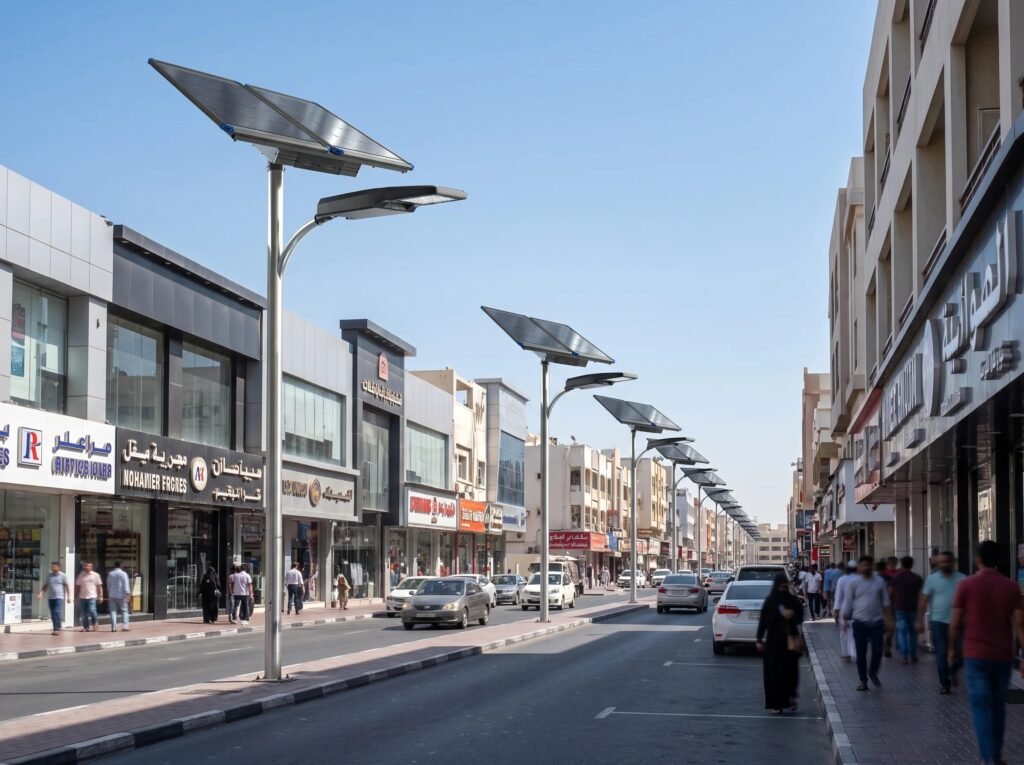
Street lighting is one of the biggest electricity costs a city carries, and one of the most visible services it provides. When a road goes dark, residents notice within a day. That combination of high cost and high visibility is why so many smart city programs now put solar street lighting near the top of their plans.
This article looks at how cities are using solar street lights to cut costs, improve reliability and support their wider smart city goals, and what city planners should look for when they move from pilot projects to city-wide rollouts.
Why Street Lighting Is a Smart City Priority
In many cities, public lighting accounts for a large share of the municipal electricity bill. Traditional street lights also depend entirely on the grid: when the power fails, so does the lighting. And extending lighting to new districts usually means expensive cabling, trenching and grid connections.
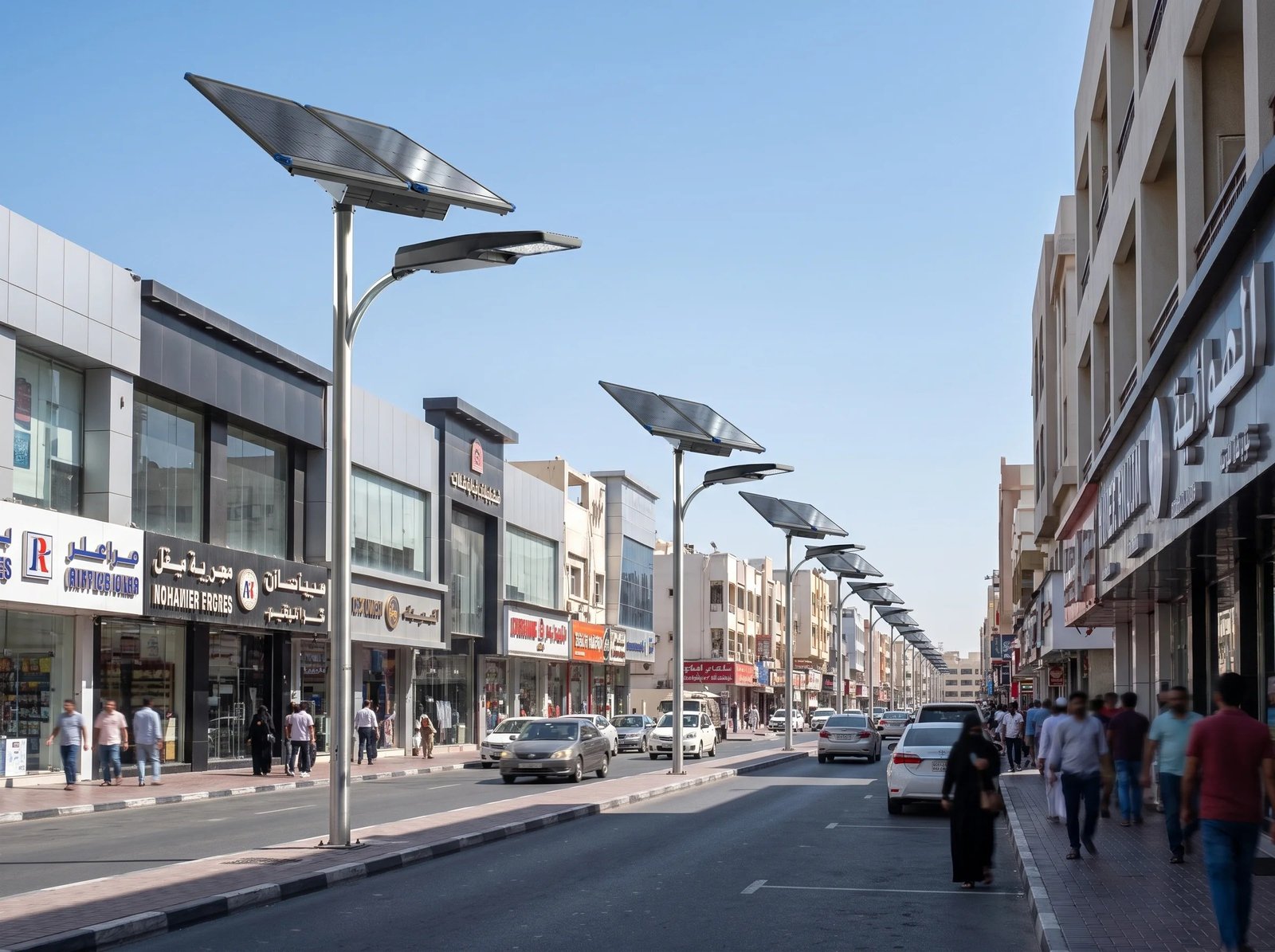
Solar street lights change that equation. Each light generates and stores its own energy, so it runs without a grid connection and without an electricity bill. For a city, that means:
- Lower running costs. No energy bills for solar-powered roads, and fewer cables to maintain.
- Resilience. Lights stay on during grid outages, which matters for safety at junctions, crossings and public spaces.
- Faster expansion. New roads and districts can be lit without waiting for grid infrastructure.
- Progress on climate targets. Lower energy use and emissions from one of the city’s largest loads.
Where Cities Use Solar Street Lighting
Smart cities rarely switch every light at once. Instead, they start where solar brings the biggest advantage:
- New roads and expansion areas, where solar avoids new grid connections entirely.
- Parks, waterfronts and public squares, where trenching would damage landscaping.
- Bus stops, crossings and junctions, where reliable light improves safety.
- Peripheral and informal areas that the grid does not yet reach.
- Industrial zones and logistics areas with long roads and high lighting demand.
What Makes a Solar Street Light “Smart”
Modern solar street lights are more than a panel, a battery and a lamp. The controller inside each light decides how energy is stored and used, and that is where much of the intelligence sits:
- MPPT charge controllers get more energy from the solar panel, especially in cloudy weather.
- Programmable dimming runs full brightness during busy evening hours and lower output late at night, which extends battery life and autonomy.
- Motion sensing raises the light level when pedestrians or vehicles approach on quieter roads and paths.
- Remote monitoring, where used, lets the city see battery status and faults without sending a crew to every pole.
For many cities, simple and reliable dimming profiles deliver most of the benefit. Advanced monitoring is valuable at scale, but it should come on top of a well-engineered light, not instead of one.
From Pilot to City-Wide Rollout
Many smart city lighting programs stall after a successful pilot. The pilot works, but the city-wide tender buys cheaper equipment, or the design is not adapted to different road types. Cities that scale successfully usually follow a few principles:
Design every road type properly
A main avenue, a residential street and a park path all need different light levels. Lighting designs using tools such as DIALux show the correct pole height, spacing and output for each one, and prove that the result meets the city’s lighting standard.
Size for the worst month, not the average
A solar street light has to work through the rainy season and the shortest winter days. Batteries and panels should be sized for the month with the least sunshine, with enough autonomy to cover several cloudy days in a row.
Buy performance, not just price
Tender specifications should state what the lights must achieve: the lighting class, autonomy, protection ratings, certificates and warranty. Comparing offers on lifetime cost rather than unit price avoids the false savings of undersized equipment that fails early.
Work with experienced manufacturers
Suppliers with a long record of solar street lighting projects in different climates know how sizing must change from one city to another. They can also provide the lighting designs, test reports and documentation a public tender requires.
Choosing the Right Equipment
City projects should use project-grade solar street lights designed for long service, not consumer products. Key points to check:
- LiFePO4 lithium batteries with a long cycle life and good tolerance to heat.
- High-efficiency LEDs and optics matched to the road, so light falls where it is needed and glare is kept low.
- Ingress and impact protection, typically IP65 or higher and IK08 or higher for urban roads.
- The right system design for each road: compact all-in-one lights for residential streets and paths, split systems with larger panels for main roads and less sunny regions.
- Engineering and testing. Manufacturers with strong engineering processes, such as German-engineered design and testing, put more effort into component matching and long-term reliability.
Questions to Ask Every Supplier
- Can you provide a lighting design for our actual road profiles, with results against our lighting standard?
- What battery capacity, panel size and autonomy do you propose for our worst month, and why?
- Which test reports and certificates come with the offer?
- What does the warranty cover for the battery, the LEDs and the panel, and for how long?
- Where have you supplied similar city projects, and can we speak to those clients?
Clear, specific answers to these questions are usually the best predictor of a project that performs as promised.
Measuring the Results
To build support for the next phase, cities should track the results of each rollout: energy saved compared with grid lighting, uptime through the rainy season, maintenance visits per year and resident feedback. These numbers turn a lighting project into a clear success story for the smart city program, and they make the case for extending solar to more roads.
Final Thoughts
Solar street lighting is one of the most practical steps a smart city can take: it cuts energy costs, keeps roads lit during outages and makes it easier to light new districts. The cities that get the most from it treat lighting as an engineering project, with proper designs, honest system sizing and equipment built for public roads. Done that way, solar street lights become a reliable part of the city’s infrastructure for years to come.