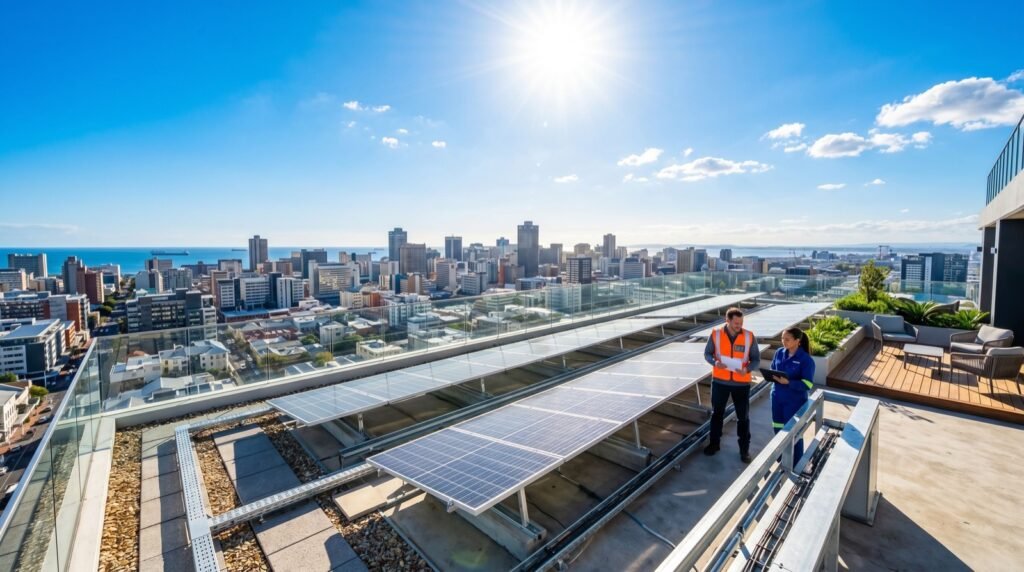
Solar Street Lights for Pakistani Cities: A 2026 Municipal Planning Guide
Solar street lights are quickly becoming the practical answer for city councils that are tired of paying monthly electricity bills for roads that still go dark during outages. A pole with its own panel, battery and LED lamp needs no trench, no meter and no utility connection. This guide explains how the technology works, what specifications to demand, and how to roll it out across a city in 2026.
The audience here is the municipal engineer, the housing society manager and the smart-city planner who needs figures they can defend in a budget meeting.
How a Solar Street Light Actually Works
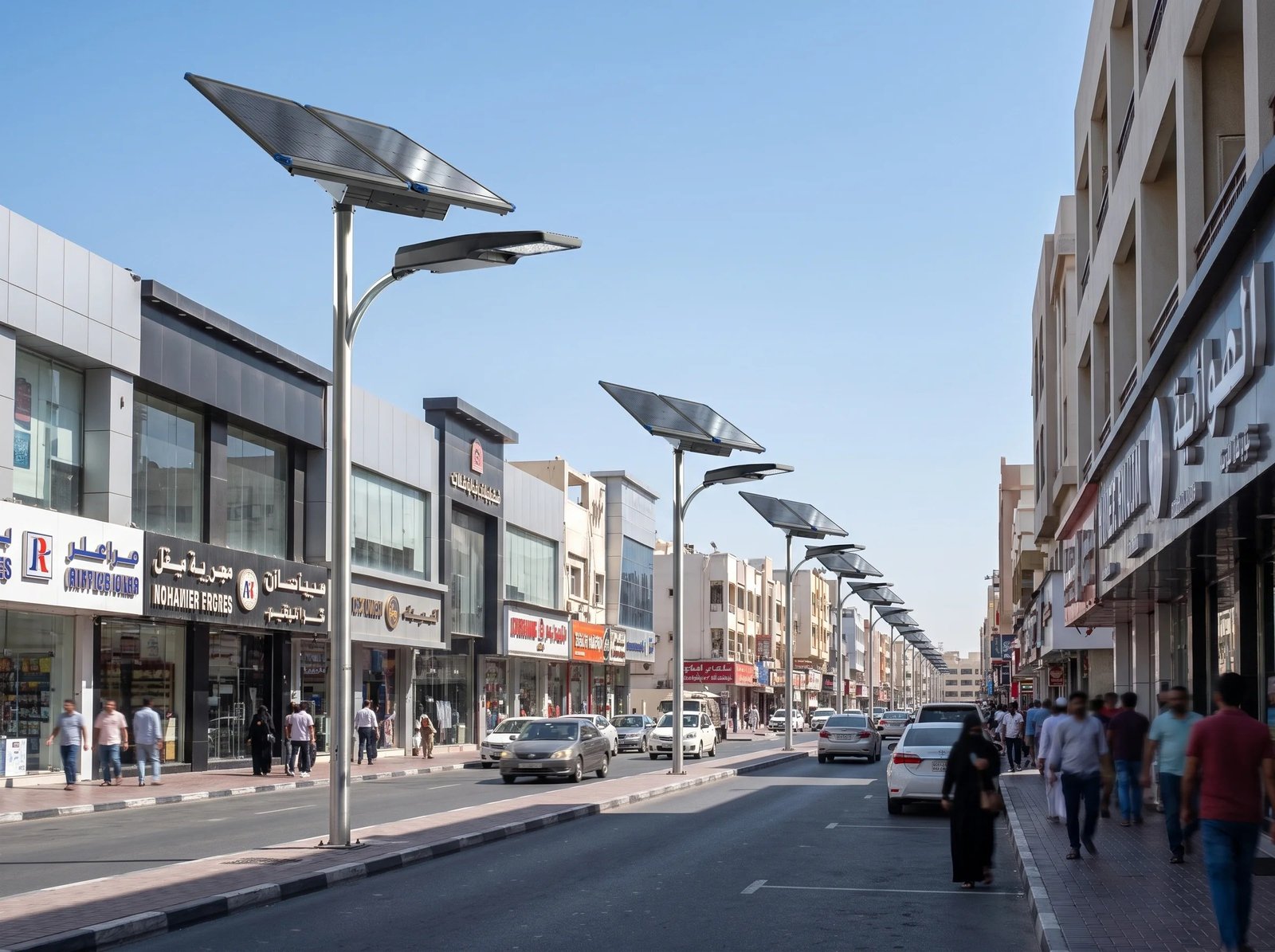
Each unit has four working parts. A photovoltaic panel collects energy by day, a charge controller regulates it, a battery stores it, and an LED luminaire turns it into light after sunset. A light sensor and often a motion sensor decide when to switch on and how bright to run.
Modern designs use lithium iron phosphate batteries, which tolerate Pakistani summer heat far better than older lead-acid packs. That single change has stretched typical service life from three years to eight or more.
Integrated versus Split Designs
Integrated units combine panel, battery and lamp in one body. They install quickly and suit lanes and parks. Split designs place the panel on top and the battery in a pole box, which suits wide arterial roads that need higher lumen output.
Solar versus Grid Lighting: A Cost Comparison
The real question for a council is lifetime cost, not purchase price. Grid lamps look cheaper until cabling, transformers, meter charges and decades of tariffs are counted.
| Factor | Grid-powered pole | Solar pole |
|---|---|---|
| Trenching and cabling | Required | None |
| Monthly electricity bill | Ongoing | Zero |
| Works during load-shedding | No | Yes |
| Installation time per pole | Days | Hours |
| Main maintenance item | Cable faults, theft | Battery replacement |
| Best location | Dense urban grid | Outskirts, parks, bypasses |
A mixed approach often wins. Keep grid lighting where cabling already exists, and use solar for new roads, bypasses and housing schemes where laying cable would be the largest expense.
Specifications Every Tender Should Demand
Poorly written tenders produce poor poles. Spell out the following so bidders cannot hide behind vague language.
- Lumen output and efficacy: at least 150 lumens per watt for the LED module.
- Autonomy: a minimum of two to three nights of backup with no sun.
- Ingress protection: IP65 or better for the luminaire and battery box.
- Panel wattage: sized for December sunshine, not June.
- Warranty: five years on the system and at least 25 years linear output on the panel.
- Anti-theft design: concealed fasteners and tamper-resistant battery housing.
What Does a Solar Street Light Project Cost and Save?
Each pole’s price depends on lamp wattage, battery capacity and pole height. A typical 60 to 100 watt arterial unit costs more than a 20 watt lane light, but both erase the monthly bill. Councils that track the numbers usually see payback within three to five years once avoided electricity charges and cabling costs are included.
For wider context on how clean power is spreading, the International Energy Agency publishes regular data on solar deployment worldwide: IEA solar PV tracking report. It is a useful reference when justifying capital spending to a finance committee.
Choosing a Delivery Partner Across Punjab
Street lighting projects fail mostly through poor installation, not poor products. Pole foundations that are too shallow lean after monsoon rains, and panels pointed the wrong way lose a fifth of their yield.
When you need a contractor for northern routes, a solar company in Sialkot can handle industrial estate lighting where export factories run late shifts. For federal territory projects, work with a solar company in Islamabad that is familiar with CDA approval procedures and the stricter aesthetic rules on major avenues.
How Smart Cities Use Solar Lighting Intelligently
Basic solar poles switch on at dusk and off at dawn. Smart versions go further. They dim to 30 percent when no one is nearby, then rise to full brightness when a pedestrian or vehicle approaches. This extends battery life and cuts light pollution.
Connected poles can also report battery health and faults to a dashboard, which removes the need for night patrols to find dead lamps. To see how other cities have approached the savings side, read this piece from our network on reliable local experts who run municipal lighting programmes.
A Field Tip on Panel Tilt
Many installers fix the panel flat to the pole top. In Pakistan, a tilt close to the city’s latitude, around 30 degrees, lifts winter yield noticeably. Winter is the hard season because shorter days coincide with longer nights, so size for it.
A Phased Rollout Plan
- Phase one: audit existing poles and mark roads with no grid access.
- Phase two: pilot 20 to 50 poles and measure actual night-time autonomy.
- Phase three: scale to the full tender with performance clauses in the contract.
- Phase four: set a yearly cleaning and battery inspection schedule.
Maintenance Costs Councils Often Forget
Budget for upkeep from the start. Panels collect dust quickly along unpaved shoulders, so a washing round every month or two keeps output steady. Set aside funds for battery replacement in year six or seven, and keep a small stock of spare controllers so a failed unit is back in service within a day instead of a month.
Frequently Asked Questions
How long do solar street lights last?
The LED and panel usually last 10 to 25 years. The battery is the shortest-lived part, with lithium iron phosphate packs typically lasting five to eight years.
Do solar street lights work on cloudy or smoggy days?
Yes, but with reduced charging. Good designs carry two to three nights of autonomy, which covers most winter smog spells in Punjab.
Are solar street lights safe from theft?
Theft is a real risk. Choose anti-theft fasteners, higher mounting heights and integrated batteries that cannot be removed without tools.
Can a housing society install them without city approval?
Private roads inside a society generally need only the society’s approval, but public roads require permission from the relevant development authority.
Conclusion
Solar street lights give Pakistani cities a way to light roads without adding to the electricity bill or waiting on grid extensions. Write a tight specification, pilot before scaling, and pick contractors with local installation records. Start your audit in 2026 and the savings will begin the first month the poles go live.